51萝莉
51萝莉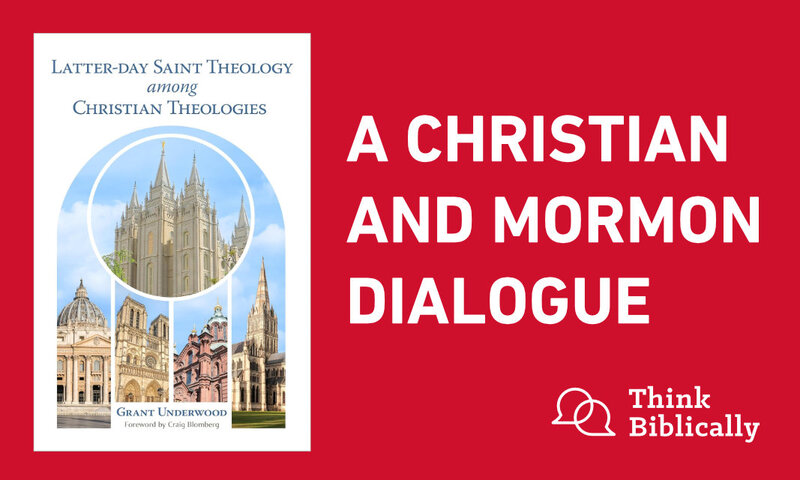
Where do evangelicals and Mormons agree and where do we disagree? For this unique episode, Sean dialogues with BYU professor Grant Underwood about his new book . Dr. Underwood has been in dialogue with non-LDS people of varying faiths for decades. They discuss Jesus, salvation, scripture, and many more important theological and biblical issues that are at the heart of Christian and LDS discussions today.
Grant Underwood was a historian of The Church of Jesus Christ of Latter-day Saints and a professor at BYU when this was written. Dr. Underwood earned his BA and MA, both in history, from BYU. He received his PhD in history from the University of California at Los Angeles. Underwood and his wife, the former Sharee Jolley, are the parents of seven children.
Episode Transcript
Sean McDowell: [upbeat music] Hey, friends. Welcome to a special episode of the Think Biblically podcast. I recently was joined by BYU professor Grant Underwood, who's written a fascinating new book called Latter-day Saint Theology Among Christian Theologies. He's been involved in dialogues with evangelicals and others for about 30 or 40 years. So he came on the podcast, and we just had a conversation about what we have in common between what you might call traditional Christians, or specifically here at the Think Biblically podcast, evangelicals, and Latter-day Saints. So keep in mind this is not a debate. We're just having a conversation between two professors, but we get into a lot of the interesting topics related to the character of God, the person of Jesus, the Trinity, and I think you'll find this a very fascinating discussion. So as always, let us know what you think, and enjoy this special episode in which I have a great conversation with Professor Grant Underwood. Do Latter-day Saints and traditional Christians worship the same God? Does LDS theology belong among Christian theologies, or is it in a separate category of its own? Here to discuss this with me is BYU professor Grant Underwood, author of a fascinating and helpful new book called Latter-day Saint Theology Among Christian Theologies. Dr. Underwood, would love to have you here at 51萝莉 sometime or visit you at BYU, but for now, to start this conversation, thanks for joining me from a distance.
Grant Underwood: My pleasure.
Sean McDowell: Well, before we jump into this conversation, right away, sometimes it gets sidetracked from the language that people use. So I wanna read something in your book where this is very early on in introduction. You said... You're talking about how some people have used the term Mormon or Mormonism negatively. And then you say, "At the same time, academic literature, particularly religious studies and the media, have a long history of using Mormon or Mormons and Mormonism to refer to Latter-day Saints and their beliefs and practices." And so you seem to be okay with that in this type of conversation. Is that fair? Anything you wanna add to the kinda language that we'll use today in this conversation?
Grant Underwood: I think that's appropriate. It's, There's been a desire among the Church of Jesus Christ of Latter-day Saints to, focus on the full name as part of their stressing and emphasizing their commitment to and love for Jesus Christ. But obviously, Mormon and Mormonism has a long history and has been used widely. And in a setting where that's what people are used to, let's let them be synonymous.
Sean McDowell: I love it. So we'll just ask each side to give us grace as we work through this conversation. Well, I read your book. It's over 500 pages, and I shoulda done the math to see if it's quite as long as the Book of Mormon. I don't know.
Grant Underwood: [laughs]
Sean McDowell: But it's a long book, that's for sure. But really well-researched. There's no question about that. Tell us kinda why you wrote it and maybe what makes it unique.
Grant Underwood: Well, that's a great question. And in the little preface, I tell a story that I think people might find interesting, that dates me a bit, takes me back to my teenage years. Two experiences were, fundamental there. First and foremost was my own conversion experience, my own awakening to the redemptive work of Jesus Christ that has impacted and guided my life ever since. Because of that experience, because of my spiritual rebirth, of being born again, I became friends with a number of folks who, at that particular time, the Jesus movement was, in full swing. And I lived in Southern California, and one of my best friends was also a born-again Christian. And though we worshiped in different churches, we were comrades in Christ. And I went with him to, the great Calvary Chapel and heard the famous Pastor Chuck, and- We did Bible studies together at high school. This would sound weird today, but back then, at that particular moment there in the 1970s, that was, very much... California was awash in Christian conversation at the time. And so out of that experience, I was always interested in clarifying my own understanding of the scriptures and of Christian teaching. And, the second experience that reinforced and prompted basically a lifelong interest in writing a book like this was my teacher. On one occasion, it was a world religions classes, and various, students, were to make presentations. I was a little shy, and I, when it came to Mormonism, I asked that, "Could we have the [laughs] missionaries come in and do it for me?" and as it turned out, they were unavailable. And so, the teacher said, "You can do it." And I studied and did it and survived the questions. And, at the end, the teacher said one little thing to me that lasted. She said, "Grant, I think in your future you will be able to explain your faith very well to other people." And that kind of, you know, inspired a teenage kid with- ... "Maybe that is something I could do and should do." And so I went on to pursue my studies in Christian history And in American religious history generally, and in Latter-day Saint history, and over a 40-year career, wrote and researched in these areas, always interested in kind of situating Mormonism within the broader flow of Christian thought and tradition.
Sean McDowell: Mm-hmm.
Grant Underwood: And so this book kind of is really the culmination. I literally retired a few months ago.
Sean McDowell: Oh, wow.
Grant Underwood: And this book came out, just months before, and I'd been working on it, as I mention in the introduction, it's... I'm not the most brilliant guy around. [laughs] I'm a little slow and methodical, kinda like the, tortoise and the hare there. I just plod along. It took me a dozen years to really kind of bring everything I had been experiencing and studying, together in this volume. The motivation for it really goes back to those first stories and my love for my very first and wonderful Christian friends, and then countless others since then. And in the last handful of years, I had a chair at Brigham Young that was focused on kind of religious understanding and started dialogues, with a Latter-day Saint, a Pentecostal dialogue, a Latter-day Saint Orthodox, as in Eastern Orthodoxy dialogue. These are just wonderful experiences. People that... I mean, last, I'll finish with this. Last-
Sean McDowell: Sure
Grant Underwood: ... At Christmas time, we had a a gathering in Salt Lake that Walter Kim and some of his council and others came and met with some high-profile people from the, Latter-day Saint church. And what a wonderful experience that was to meet all those people. I feel like, and I probably did, I came out of an experience in South America where you do the abrazo, and I do that. I'd give you an abrazo right now, Sean. [laughs] I gave Walter one. I just, I love, I feel such a camaraderie with, so many good folks, and I wanted to communicate something of that love and respect and what I have learned and gained from those interactions over the years.
Sean McDowell: Well, it's clear you're writing as a scholar, but also somebody who's had these conversations, and writing as a historian. So for somebody who does history, we want somebody to plod along and dot all their I's and cross all their T's-
Grant Underwood: [laughs]
Sean McDowell: ... And you do that. I'm an apologist and an evangelist, so my mind, when I read this, goes elsewhere, but we're gonna bracket some of those questions.
Grant Underwood: [laughs]
Sean McDowell: This is not a debate. What I really am aiming for is clarity. What I do a lot on this channel is where do we agree, where do we disagree? A person who inspired me is Dennis Prager, and he would say on his radio show, he would say, "I just want clarity on the issue, and the reason somebody has behind it." And then, you know, we can move forward with those further discussions as it comes afterwards. But why did you... We've never met before. Why did you agree to a conversation with an apologist, who teaches apologetics at 51萝莉?
Grant Underwood: I'd love to answer that question, because my choices in life, in terms of interaction with people, really go to trying to discern the heart. And I felt that you, Sean, have, a heart that is open and accepting and genuine. I am sure you would, as an apologist, like to set me straight on
Sean McDowell: [laughs]
Grant Underwood: ... Variety of Christian doctrines, and that's, I accept that.
Sean McDowell: Sure.
Grant Underwood: I don't recoil from that. I see that as an act of love. I've never taken umbrage or offense to folks who come out of a perspective of, "Let me try to help you understand things that are crucial to your eternal salvation." I see that as an act of love. In the end, I may not agree or I, or whatever, but I'm grateful for the motivation. And so I sensed in you from that one lecture I heard, here's a man who, at the same time, he has deep convictions, and there's no, there's not a chance he's gonna be tomorrow saying, "Well, I'm ready to join the Church of Jesus Christ of Latter-day Saints," but who nonetheless feels an openness to getting greater clarity and understanding Latter-day Saint doctrine with greater nuance and subtlety, rather than sweeping generalization or, worse, caricature. And I thought, "I'd love to talk to this man."
Sean McDowell: Well, I appreciate that. We're gonna get into it. Let's start with maybe some of the common ground. I do this with my guests on a host of areas where we find common ground. And obviously because the Latter-day Saint church came out of the historic Christian faith, meaning it didn't come out of Islam or Hinduism or Buddhism, we're going to find a lot of common ground. That's totally expected. So some things, I think there's some historical common ground, theological common ground. There's also cultural common ground. I think maybe it was at the beginning of your book that Albert Mohler spoke a number, about a decade ago at BYU, and he said, "I don't believe we'll be in heaven together, but we may go to jail together," [laughs] ... Similar cultural commitments about marriage and other conservative values, that we might share. But, you know, a few things jump out to me. Obviously, we think Jesus lived, did miracles, claimed to be God. One of the things about your book, I had never really thought much about Mormon eschatology, and that there is a whole section on kind of a millennial state, and there's maybe some differences there, but I had, I had never even thought about that there is an afterlife, that the Bible's authoritative even though we might nuance some of those particulars. One of the things that struck me is human agency. In a, in an age when there's so much emphasis that we are victims and products of our environment, I was pleasantly surprised how much human agency and choice and responsibility humans have within Latter-day Saint theology, evidence for intelligent design, et cetera. I mean, I could go on and on. Those are a few things. But in your mind, what are some of the big areas that we have in common ground before we get to maybe some of the significant differences?
Grant Underwood: Well, I think first and foremost, it's that love of the Lord. I believe that it, in my own experience, it goes back to my conversion experience as a 15-year-old in Southern California, that that was the common ground. My friend Mike and I, we didn't know a lot about theology, but we knew that we appreciated the atoning, redemptive work of Jesus Christ. It had changed our lives. It had changed my life. And when one feels that, and I believe you must have had the same experience, that when you know that Jesus has brought to you a transformation, a richness through his redemptive work, that's, it's the overpowering, dominant reality in your life and has been throughout my entire life. And I think, if one really gets into conversing with, Latter-day Saints, I mean, not all, as in any group, not all have had a profoundly transforming religious born-again experience. They may attend, they may label themselves Christians. They may attend a very orthodox church. But like John Wesley said, they're what John Wesley called almost Christians. They they go through the motions. They're there, and hopefully in the process of wanting to have that experience. But as Wesley commented and so many others have stressed and, for heaven's sakes, it's one of the Bebbington Quadrilateral about evangelicalism, is the importance of that transformative experience rooted in a grace-given understanding of what Jesus Christ has done for us. To me, that's, everything else pales in comparison. Now, that may sound funny from a guy who just wrote a 600-page book [laughs] on all the other elements.
Sean McDowell: Sure.
Grant Underwood: But if you're talking about what we really share, what most Latter-day Saints and most other Christians, devout Christians would share, would be that gratitude for.
Grant Underwood: I remember something that Rich Mouw, I'm sure you know Rich. He's been a friend and a mentor for many years.
Sean McDowell: Sure.
Grant Underwood: Rich went to a a service. He was asked to kind of talk about, I think they'd asked him to speak on Calvinism and describe and explain what that all was. This was to a Latter-day Saint group, and they had a little, music- I mean, they had a hymn and a prayer before they got going. And the hymn that they sang was an old Charles Gabriel hymn, "I Stand All Amazed." And what caught Rich's attention was, there's hundreds of people in this congregation, and they all knew the words. "I stand all amazed at the love Jesus offers me, confused at the grace that so fully he proffers me." And then he said, and I thought this was so beautiful, you probably know the last line, and we know this, and I sing this, and Latter-day Saints love this. It's one of their favorite hymns, where it talks about the pain and suffering, and finally kneeling at his feet and adoring him at the throne. I do believe, lay all the little theological, idiosyncrasies aside, I think if you wanna know what's at the heart of Mormonism, of Latter-day Saintism, it has actually been that from day one. I'll say one more thing on this. I spoke to a group of evangelical students some years ago, and and my talk was, focused on early Latter-day Saint expressions that sounded so appreciative of Jesus Christ and what he has done and his work on the cross. That that was eye-opening to those students.
Grant Underwood: And I think that if one looks for that, it's there. You know, Latter-day Saints really frankly until recently have
Grant Underwood: not necessarily kind of been waving that flag as publicly as we are today, but if it's always been part of their religiosity, and certainly it's been part of mine.
Sean McDowell: Thank you for sharing that, and your testimony and your experience I think weighs into a lot of how we look at our faith. What does it mean to have a religious experience? Who is Jesus? What does it mean to be born again? These are all big questions. I think you're right that what we have in common is the emphasis on a salvific experience that is transformative. You're right. Evangelicals will often [laughs] share their testimonies and stories very similarly as you did. The question at the heart of it that we're gonna kinda get to is what underlies that? What is the, what is the gospel that we both look at? How is it similar? How is it different? And that's where I think your book is immensely helpful, where you've really done the work to look at the sources and underlie it, and sometimes say, "This is outside of traditional Christianity, and this is within traditional Christianity." And so why don't we jump in and take a look at these? I figured we would... Two things motivated me. Number one, kind of the big questions, so to speak, and these are not little nuances where somebody might say, "I've never heard this within Latter-day Saint theology," but they're the big issues at play, and they're also some of the early ones in your chapter that are kind of core theological issues. And the first one is on God the Father. You discuss this very early in the book. So maybe from a Latter-day Saint perspective, and then I just follow up with a few questions for you, what is God the Father like? Who is God the Father?
Grant Underwood: Well, in that chapter, I illustrate,
Grant Underwood: several dimensions to that very complex question. I think the point that people land on is that Latter-day some people land on that's distinctive and that I outline is that Latter-day Saints have a distinctive ontology. That's a fancy word for kind of theory of the nature of being and existence. And rather than seeing God as something, wholly other, completely,
Grant Underwood: distinct from humanity, Latter-day Saints envision a kind of filial, familial connection to God, so that God, in creating human beings, first creates their souls, their spirits, and uses a term, that represents procreation more than just creation. So there's a kind of the birth. Spirit birth is a phrase that Latter-day Saints use, that when Christians talk about obviously we're children of God. But Latter-day Saints add to that a more kind of ontological connection that sees God and humans as God's children, literally, in a sense that they were created souls by him, procreated souls. And that that puts God into a familial and even a spiritually, material connection to human beings. And that's quite different, we all understand, from classical theism, where God is immaterial, all the ims: immutable, impassable, immaterial, and so forth.
Grant Underwood: Latter-day Saints find that, to be inspiring, that they have a connection to the Father that is more than figurative, and so they look forward to a kind of intimacy there that
Grant Underwood: kind of bridges that ontological gap. Now, that's one dimension, and we can talk about that, the the kind of physicality, materiality, corporeality of God, which is quite distinct. But what I also do in that chapter, I think this is important, because you said a moment ago that our religious experience, our connection to the Lord grows out of our theology, and I think it's equally important. You want to know what are our commonalities. In that chapter, I talk about Latter-day Saints' understanding of all the divine attributes. What is God like? God's merciful and loving and all-knowing and all of that, and those, that could come out of any basic Christian primer of the nature of God. So it's kind of like if you want a bit of clarity, I would say that Latter-day Saints believe about everything everybody else believes about God But adds to that in terms of his transcendent wonderfulness, perfection, incomprehensibly wonderful, and beyond our full appreciation, et cetera, et cetera,
Grant Underwood: that also they envision that transcendent infinite God as being clothed in a celestial, transcendent, corporeal body.
Sean McDowell: Very helpful. Let me see if I can sum up some of these key points. One is that, say, traditional Christianity would hold that God is infinitely different, qualitatively different from us in kind, but Latter-day Saints see human beings as not qualitatively different, maybe quantitatively different. So that infinite gap in principle would not be there. Is that a fair summary, you would say, in one key point, in difference?
Grant Underwood: You would.
Sean McDowell: Okay. All right. Fair enough. It is interesting the way you frame it. This is helpful to me, that you would say, "We agree with all the things you have, but we add to it certain things." To me, I look at that and I feel like, "Wait a minute, this is taking away from the infinite distinction of who God is, not adding to it," but that's my theology looking at it, and that might be a different way that we approach it. So God the Father, you would say, in the chapter, has all the omnis, so to speak. Part of the question is, did he always have those omnis? And I think as you lay out in your chapter pretty clearly, that this might be another area where we differ. And there's plenty of quotes I could read. You obviously know them. You include them in your book. For example, the... I found this actually was not in your book, I don't think. Gospel Fundamentals says, "Help us remember that our Father in heaven was once a man who lived on Earth the same as we do. He became our Father in heaven by overcoming problems just as we do," just... I'm sorry, "just as we are to do on this Earth." And of course, the famous fifth President, Lorenzo Snow, "As man is, God once was. As God is, man can become." King Follett's sermon. There are some other ones that make the point that God the Father was not eternally with those omnis, but overcame certain problems, challenges to arrive at that state. Is that fair? I just wanna be sure that you would agree with that, 'cause that seems to be what you laid out in your chapter as well.
Grant Underwood: Almost right. I think that what I would, what I do point out in the book is that, the prophet president of the church, Gordon B. Hinckley, was interviewed and asked this very question, and he said, "You know, I don't know a lot about that. We don't teach that. We don't emphasize that." In other words, God's pre-Godness is unknown. It it's part of the implicit idea that in one sense we're all one race or species or type or kind. That's kind of an implication that's never really been unpacked, and certainly not with any kind of dogmatic, clarity or finality. So I can't really comment on what God was like before God was God. And I can tell you this, furthermore, that Latter-day Saints, the ones I know and worship with and have lived with for 60 some odd years of my life, they don't, we don't talk about that. I'm a regular churchgoer, and I can tell you that I would really be hard-pressed to remember an occasion where that topic came up, let alone was entered into with sustained conversation. Why? Because of what I said a moment ago. Latter-day Saints are focused on that which scripture teaches about God, and about his powers and love and transcendence and knowledge and all of the omnis and capabilities. And Latter-day Saints, in fact, if pressed, might imagine that, well, that pre-God state of God is so far back in timeless eternity that it it's frankly incomprehensible. He's always been God, and that's why Latter-day Saints view him practically and operationally in the same way that so many other Christians do. Because they don't sit around and noodle about, "Well, gee, I wonder what God did when he was just a, quote unquote, 'ordinary person' on the trail to eternal progression and godhood." they don't think about that. That, that's not an issue. If they're looking for, an example, they look to Christ. They look to Christ in the Hebrews sense of, "Here is a man who was tested in all points like as we are," as it says in Hebrew. We have an high priest who is not beyond understanding our infirmities, and where Paul talks about him as the archegos, the pioneer, the leader of our faith, the exemplar of our salvation. That's where Latter-day Saints go. They don't sit around and think about something they can't begin to comprehend. So for me, the whole issue of trying to settle what God was like before God became God is a dead end for two reasons. Most importantly, we don't know anything about it, don't proclaim to know anything detailed about it. Beyond that affirmation, because of its implication about ontological continuity, we know nothing. And secondly, it's a dead end because that's not where Latter-day Saints go in their spirituality and religiosity. Once again, it comes back to Jesus Christ. That's where the focus is. That's who we look to understand how to go and progress and develop and overcome difficulties, et cetera.
Sean McDowell: Thanks for helping me understand how common Latter-day Saints think about these issues, 'cause you obviously are one. You retired, go to a church, far more present there than I am. And I certainly have, I have space for mystery. Each of us, at some point in our faith, are gonna say we're bumping up against mystery here. We don't know any further. The question is where. If I can lean in just one more on this, and then we'll shift to Jesus. There seems to be, as I read, certain key things like the King Follett sermon and statements by Brigham Young. While we don't know the process that Joseph... I'm sorry, that, God the Father went through, there's some clear statements that God the Father had changed. Like, of course, in the sermon, God Himself, the King Follett sermon, "God Himself was once as we are now, and is an exalted man, and sits enthroned in yonder heavens. We have imagined and supposed that God was God from all eternity. I will refute that and take away that veil." Brigham Young, I mean, he said in his Journal of Discourses, "How many gods are there? I do not know. But there never was a time when there were not gods and worlds, and when men were not passing through the same ordeals that we are passing through now. That course has been from all eternity, and it will be to eternity." Seems to me, one thing we know is that God, according to these statements, is that God has not been God from all eternity, that he was as we are now, which seems to strongly imply that we could become like God is. I mean, Joseph Smith, he said in his history, "Learn to be gods yourselves, and to be kings and priests." So I have, full space for, like, mystery and pointing that we don't understand. But as I read, and I've read at least a fair amount... I just finished the recent Joseph Smith, biography that I thought was fascinating by Turner. I thought it was really interesting. It seems to me that at least is clear, even though we don't know the mysteries of it, God has changed over time. He was as humans are now in the past, which seems to imply we could progress to that state. What would your thoughts be on those, at least those kind of points that seem to be pretty clear in LDS theology, and you include them in the chapter?
Grant Underwood: I think it's important to look at, this from two particular perspectives. One is historical development, and all theologies experience, development and change and clarification, and et cetera. The second point is to then look at what is the current kind of position and teaching. So I acknowledge, because it always gets raised, Joseph Smith said this, or these are, notes that we're taking in a sermon. We don't have an exact transcript, but I think we can reasonably conclude he must have said some things like that, and Brigham Young said some things. My book is saying, "Look, I want to introduce my Christian friends to Latter-day Saint theology, teaching, and practice in the 21st century." It... So there are dimensions of what was said back then that in the 21st century just are not part of the everyday religious conversation and experience of Latter-day Saints.
Grant Underwood: So
Grant Underwood: one needs to kind of say, for instance, you mentioned, well, that we can become like God or become gods. That there's a subtle distinction there, and I would recommend,
Grant Underwood: to any reader of the book to look carefully at how I unpack that with some nuance in the final chapter on, the end times and on the future afterlife, because I think there's a lot of misunderstanding. Latter-day Saints very clearly do not assume that they will somehow be God's rivals or equals, but that they will participate in a divine nature. This is not, about challenging God or demeaning God. It's about becoming the best of what divine nature entails in terms of love, mercy, compassion, understanding, knowledge. All those attributes that I mentioned before that Latter-day Saints in the 21st century are focused on when they think about God, those are the kinds of things that they think about and yearn to be like To be Christ-like, to be God-like. But that's different than how it gets caricatured in the literature because of statements that somebody made that are not official, that were part of a kind of, oh, theologically imaginative era where people are trying to sort things out, and they were saying wild things like, "Oh, boy, one day I'm gonna have my own planet, and I'm gonna rule," and you know. No. That, that's not... No Latter-day Saint that I know I have ever heard utter those kinds of ideas. Now, that's the way they get presented, and
Grant Underwood: taken out of context. But even when they're not taken out of context, it's important to understand that's not the thrust or emphasis or characterization of the church and its members today. So there are things that I think we're all glad, Brigham Young was very opinionated and outspoken, and Joseph Smith could be the same. Not everything that Joseph Smith or Brigham Young uttered, or even a modern prophet utters, is necessarily taken as official dogma, kind of definitive orthodoxy. It's made in a particular time, and place, and coming from a particular perspective. And those times, places, perspectives, circumstances have changed, and so it's framed and viewed differently or emphasized differently than it was in the past. That's not denying that those things were said. To the best of our knowledge, things were said, but are they the defining positions and today, and even more importantly, how are they even understood? Latter-day Saints don't just, like, have the mind of Joseph Smith and Brigham Young, and there... I've sat in many circumstances with scholars as well as ordinary Latter-day Saints saying, "I'm not really sure what he meant by that." "This is how we see it today."
Sean McDowell: Fair enough. So I won't, I won't push there any further. This raises a lot of questions about Joseph Smith in a sermon speaking claims that he made and how authoritative that is, obviously. Same with Brigham Young. I think there's some similar claims from Hinckley in the 21st century saying the same kind of things in, you know, gospel fundamentals is the 21st century. But we can let that go and have that debate about where things are today. So I think we've at least drawn some clarification where we're at, which is good. So let's shift to the person of Jesus now, a little bit more particular, if that's okay. Tell me who Jesus is on LDS theology.
Grant Underwood: Well, he is the Savior, the Redeemer. He is God the Son. He's the second person of the Trinity.
Grant Underwood: He is,
Grant Underwood: the most amazing being that has ever walked the planet.
Grant Underwood: I could go on and on.
Grant Underwood: He is both divine and human. And,
Grant Underwood: of course, in the Latter-day Saint ontology, they, as you may remember in that chapter, and I hope folks will enjoy that chapter on the person of Christ, where I enter back into the long discussion in patristic Christianity about, the relationship between the divinity and the humanity in Jesus Christ, and it's such a fascinating, period of theological exploration and discussion and reflection,
Grant Underwood: and varying understandings of that. For the Latter-day Saints, they haven't wrestled as much with trying to parse Christ's divinity versus his humanity, because as we mentioned a moment ago, they see them as one, that there is one nature there that
Grant Underwood: comes in Christ's particular case with an additional endowment of being, the Son of God, not only spiritually, but also literally, in an earthly sense.
Grant Underwood: So
Grant Underwood: it's pretty much like other humans, but not exactly, 'cause he had certain divine endowments. And of course, he was God the Son before the incarnation.
Grant Underwood: And so Latter-day Saints envision, a form of What Christian theologians would call kenosis from Philippians 2, the emptying. And that's been a, with their concept of what they call the veil, that veils, from the pre-earth existence, where he was the Word, the Logos, God the Son, the Creator, to becoming, as Origen said, a squalling infant in the arms of Mary and going through earthly experiences, et cetera. And in all of that, there is room for varied understandings. And, Latter-day Saints affirm that however one might try to analyze the divinity-humanity combination in Jesus of Nazareth, who walked on Earth for 30 some odd years, what they do affirm is what's taught in the Gospels. His nature, His miracles, His teachings, His gifts, His love, and that's who Jesus Christ is. And then most importantly is that culmination of His life and teachings that came on the cross and in the resurrection that essentially brought redemption to humanity. And because of Him, Latter-day Saints believe that all will be resurrected, that that will happen. They also believe that those who are converted, those who yield to acknowledge and appreciate and live, in accordance with Christ's teachings and example, that there will be a richness in the afterlife that is only possible because of Jesus Christ. So that's kind of who He is in a nutshell. Tell me more where you want-
Sean McDowell: Yeah
Grant Underwood: ... To go there.
Sean McDowell: Yeah, no, that was really helpful from an LDS perspective. I agree with that, and I think there's a ton we can, we can agree on. Part of what interests me is, in 15th President, Gordon Hinckley said, he said, "They say do we do not believe in the traditional Christ of Christianity. There is some substance to what they say." I thought that was interesting. So in part, when you said there's not an ontological difference between us and God the Father, presumably the same is true with Jesus. 'Cause in traditional Christianity, whether Orthodox, Protestant, or Catholicism, Jesus is eternally the self-existing creator who is one with God, who's God in his human flesh, took on human flesh. And that seems to be a little bit different than from what I'm hearing come from LDS sources, that we are similar with Jesus in character, that we are all sons of God, so to speak. So he might be more advanced, he might be ahead of us, he's our elder brother, but we share a similar kind of nature as Jesus as we do with the Father. So again, that ontological difference would not be there. Would you agree with that?
Grant Underwood: In part.
Grant Underwood: I think the question, part of the mystery is, how was the incarnate Son's experience different than the ordinary human experience? There, there's a lot of Christian teaching that wants to emphasize the full humanity of Jesus, and we certainly saw that with the... That's kind of what we might call a Nestorian, thrust in that direction, of emphasizing we don't want to in any way downplay his humanity by affirming his divinity, that his divinity did not eclipse his humanity on Earth. And that's a very interesting conversation. To what degree, how does, how does a divinity inhabit a humanity in a way that it it doesn't eclipse the authenticity of the human experience?
Grant Underwood: You know, those are profound questions a lot of Christians have wrestled with. It's not, it's not something that, Latter-day Saints have explored or discussed as much as, you know, some, do in their, in Christology. But it's, there's a, there's a desire to affirm,
Grant Underwood: a connectedness between Christ's divinity on Earth and his humanity that maybe is not as pronounced in Latter-day Saint teaching. That they want to give room to, emphasizing that Jesus' connection to human beings is such that humans can draw inspiration from that. That he's not just, as someone once said, I quote in the book, "It's not just switching on a divine power pack any time he needs it to get through human experience."
Sean McDowell: Mm-hmm.
Grant Underwood: That and sometimes he's letting the divine part dominate, and other times it's the human side. Or the, there's the human will and the divine will, and how do they interact? You mentioned the word mystery. The, there are two great acknowledgments of mystery that I have seen repeatedly, I'm sure you have, too, in the course of Christian history. One is the Trinity. At the end of the day, despite everybody's best attempt, that's a mystery. And number two is how Christ is both fully divine and fully human. That's a mystery. We can try to analyze and you know, dissect and so forth, but at the end of the day, that's a mystery. And again, Latter-day Saints on this, they come back to a statement that a prophet mentioned in the Book of Mormon made, where he was discussing a matter with his son, and he says, "Now these mysteries are not yet fully made known unto me, therefore I shall forbear."
Grant Underwood: forbear from getting distracted by the intricacies of something that cannot fully be comprehended. Sure, we should, as the prophet had said, "Who knoweth but what this or that is a possibility or the way it was?" But at the end of the day, acknowledge the mystery, and at the end of the day, we focus on the Christ that is accessible and meaningful to us spiritually. So again, I come back to my experience with 21st century Latter-day Saints is the, these Christological questions that I find fascinating and discuss in the book-
Sean McDowell: You do, yeah
Grant Underwood: ... Nonetheless, at a practical level,
Grant Underwood: I'm not sure they interest a lot of [laughs] my Latter-day Saint friends because they just want to say, "Look, I'm with Paul. I just believe in Jesus Christ and him crucified. That's what I wanna proclaim. That's what I wanna focus on. I want this relationship with the Lord that has enriched and blessed my life and saved me from hell. That's what I wanna celebrate. I stand all amazed at that." I can't get them to stand all amazed at the Christological subtleties.
Sean McDowell: Well, it's certainly helpful to understand how Latter-day Saints today feel. Paul also was very concerned in Ephesians and in Corinthians and his other writings about correct doctrine, and not just subtleties, but getting doctrines right about Christ and his work and his identity. And so I'm, I'll just push back a little bit here. I was reading the Gospel Principles, this morning, interestingly enough, and it's from the 21st century, and it talks about, "Jesus is the only person on Earth to be born of a mortal mother and an immortal Father. That is why He is called the Only Begotten Son. He inherited divine powers from His Father." So to me, there's a big difference between inheriting powers from another source, and Jesus being one with God in essence and nature, and taking on a human flesh. So it's almost like the opposite here. I would say he divested certain kenosis, what you referred to earlier, in Philippians chapter 2, is very different than getting his divine powers from his father. And I agree with you. There's certainly a mystery in the incarnation, no question about it. There's a mystery in the Trinity. But there's also certain things we know from the scriptures about how God has revealed himself that I think it would be important to make sure we get right, and I think if we differ on this, it's fine. We're not having that argument. As much as [laughs] I want to lean into it, I'm holding back. But Robert Millet, who I know is a friend of yours, in his book Claiming Christ, I thought he said it well. He said, "Latter-day Saints do believe that Jesus was the firstborn Son of God, and that over time in a premortal existence He grew to become, quote, 'like unto God.' And yes, this does bring into question the extent on which Latter-day Saints believe that He was always God. But I would ask a rather simple question." Then he asks, "Why does this matter? Is it important?" Now, that's a fair question. Why do these Christological nuances matter? Why is it important that we believe that Jesus is always God? That's a very fair, practical question. But it seems to me he's saying here that we can ask the question, was Jesus always God and eternally God? Whereas to me, I think the scripture's clearly laid out that He's the same today, yesterday, and forever, and is an eternal God, and is qualitatively distinct from us. Now, we don't have to go into debating those passages. [laughs] Again, that's not my point. It seems to me the difference is, and again, you can tell me if I'm wrong about this, and then we can move on. You mentioned the Trinity. I wanna... I hope we have a little time to talk about the Trinity. Seems to me there's a difference between Jesus being a procreated being, depending on what's meant by that, growing into divinity- ... Gaining powers from the Father versus somebody who has always been one with the Father, didn't become God, and actually divested some of those, and we have to nuance what that means, to take on human flesh. And like Hebrews 4 says, "Then we have a high priest who sympathizes with us in every way," such a beautiful way. Yes, Jesus is other than us, qualitatively other, but he's taken on human flesh, and so he understands how we've been tempted in every way and yet did not sin. That seems to me the difference of how we're looking at this. Would you agree with that? And then let's move on to the Trinity.
Grant Underwood: Well,
Grant Underwood: I mean, in the end, I don't honestly see a a large difference there. When you are open to the divesting dimension, then I think there, that brings us a lot closer than those who do not accept any kind of kenotic theology and just have God the Son, the second person of the divinity, essentially unchanged from prior to the incarnation, occupying or taking on this body and occupying it,
Grant Underwood: for 33 years in an unchanged condition, and then ascending to the Father and returning to,
Grant Underwood: returning, continuing a kind of otherworldly existence. But in terms of his divinity, there's been no change in that he's had complete and full access and deployment of divinity prior to the incarnation, through the incarnation, and after the incarnation. That's different than saying, "Well, for a period of 33 years, there was some laying aside, some surrendering of or putting to the side some of those divine qualities, some of those aspects." And often in kenotic theology, it refers to, in some ways, the incommunicable attributes.
Sean McDowell: Sure.
Grant Underwood: And then there's a degree to even a discussion there as to, you know, to what degree and how much of that. And all, those issues actually are the ones that are relevant to Latter-day Saints, and I think that, they think through those to the degree that they do in a similar fashion. But that you're right that they do not envision a kind of unbroken divinity, unchanged, unimpacted divinity from pre-incarnation to incarnation, post-incarnation. And I think that a lot of, Christians don't hold to that view either. If they lean in any way toward a divestment notion, then they're acknowledging that there is some difference there. And in that they are, that's a point that would be similar to Latter-day Saints.
Sean McDowell: Yeah. I think the divestment for a season is very different than God developing and growing and being the self-existent eternal creator. But I won't make that case here. You've drawn out the difference. Fair enough. I do wonder, folks, if you'll comment below if maybe each one of these, we just do a deep dive at some point and say, "Okay, let's nuance, let's talk about what matters," 'cause we're covering a few topics here. But let us know what kind of conversation in the future would be helpful. You referred to Jesus as being the second member of the Trinity, and that's something I would say, but I suspect, and in your book... I actually, this is a part that was really interesting to me and I thought really helpful in particular, was that you lay out a Latter-day Saint Trinitarian view, and you end up really saying, as I read it, that if the Trinity is essential for being kind of a follower of Jesus or being considered Christian, it's outside the norm, at least of the Orthodox, Protestant, Catholic understanding and developed at Nicaea. But I don't want to put words in your mouth. Tell us what you mean by the Trinity and that Jesus is the second member of the Trinity.
Grant Underwood: Well, in that particular first chapter, I engage this head-on. I think it's important to stress that there is no, ducking here from distinctives, but-
Sean McDowell: I agree. Yeah
Grant Underwood: ... A a clear and open expression of that. I came up with this phrase at the end of what might be called separate being Trinitarianism.
Grant Underwood: Because that goes to the heart of what's different, that there are three separate beings in the Trinity, but that by retaining the term Trinitarianism or Trinitarian or Trinity, it it's important to, it subtly communicates that there is so much of how God and God nature is viewed that is similar, and which I lay out there. So the oneness of the
Grant Underwood: formulation in the early centuries that they came to was three persons in one essence, being, substance.
Grant Underwood: And
Grant Underwood: but in one. That's the unity part. And so I have several, illustrations there of the Latter-day Saint teaching and desire to affirm that oneness in every... There's that one very important quotation from a Latter-day Saint apostle who says that we view them as one in every conceivable way except one in being. So there's your big difference with most of Christian Trinitarianism, but yet it's, it shares so much. In fact, I'll just remember, I remember vividly we had this discussion in, one of our multi-day sessions in our evangelical Mormon dialogue- ... On this. And, at one point, one of the evangelical scholars, was kind of pushing some of his colleagues on this, 'cause you really get into it deep, and he said, "Okay, guys, tell me, what is really the difference between a person and a being? Because you wanna say it's crucial to say three persons in one, and what I mean, aside from the obvious physicality, what else does that mean?" And it was very interesting that, you know, people get... You get so much in the thicket here that you realize that in reality there's a lot of similarity and proximity, and it's hard to step back into a kind of Greco-philosophical conversation. We're we're using different terms. We're using different languages. We come out of a different philosophical, historical, cultural context. Trying to penetrate all of that in a crystal clear fashion, no. No this whole conversation has gone on for centuries. And so I think there's a breadth here to how one understands these terms, and I'm simply stepping into that breadth and saying, "Okay, all of these things you wanna say about the Trinity, we're on board with. But we are not on board with them being of one essence or substance." And so that's why I use the term separate being Trinitarianism, acknowledging a crucial distinction, and yet affirming so much that is shared.
Sean McDowell: I think that's very helpful. Throughout church history, and you would know this 'cause you're a church history and I'm not, is that the Orthodox, Protestant, and Catholic debates have veered from maintaining the unity and maintaining the threeness. And so if you lose the unity and go to threeness, it'd be considered tri-theism, out of bounds theologically speaking. If you lose the threeness, you move to, say, like a oneness Pentecostalism, and, you lose it on that side. So there's kind of been a dance, and people have landed it differently, but the common theme is that there's one being who is God, and three persons who share that divine essence. Now, I won't go into it here. Maybe, gosh, I keep saying this, but I didn't know how this conversation was gonna go. Maybe a really nuanced conversation on the Trinity. I think it's helpful. We won't get into that right here. But the part about your book I found fascinating is sometimes I've seen Mormon and LDS scholars say that the Trinity is kind of a form of... I'm sorry, the LDS version of the Godhead is akin to social Trinitarianism. And you clearly in your chapter say it's not, and social Trinitarianism maintains the oneness of God in being, not just in purpose. But either there's three centers of consciousness or three selves who share that one being, that social Trinitarianism. And it seems to me the difference would be is that there's not still the oneness that would be maintained in terms of essence and in terms of being, is the way you described it, but also there's a development into the Trinity that Father, Son, and Holy Spirit have not eternally been one in being and essence, but it developed over time. Those two seem to be distinct to me. Would you agree with that difference as we lay it out?
Grant Underwood: I think so. I, my, I would come back and say, I would ask you, what difference does it make, really, at the end of the day if 10 jillion years ago there was some development? Because for the last 10 jillion years, they've been one, and in terms of our, the whole, certainly the whole scope of human existence and earthly existence and this cosmos existence, that they have been one. So, you know, talking about something that's just beyond Kind of mental conception,
Grant Underwood: as somehow, I mean, I think people sometimes push on that point because they're they're thinking, they're wondering, "Does this take away from the Latter-day Saint respect for God? Are they detracting from God's glory and transcendence? Are they demeaning and my answer is an emphatic no, because nobody's dwelling on 10 jillion years ago. They're dwelling on what we all share in common, and that is a God who is supremely transcendent and glorious, and whom we worship and adore, and a Christ who is that way now and as long as we have known and worshiped him, that's the way it is. So it is technically correct to say that there was that point 10 jillion [laughs] years ago, but it just doesn't have any impact other than an arguing point and a debating point that somebody says, "Aha, I've got you on..." what do you got us on? You don't have us on anything because nobody thinks about that. It doesn't impact anybody's religiosity.
Sean McDowell: So, I apologize if this came off as a gotcha moment. That was not my intent in trying to do that with you.
Grant Underwood: No
Sean McDowell: I
Grant Underwood: Absolutely
Sean McDowell: Yeah.
Grant Underwood: You don't, but others have. Heavens, I've lived long enough to have that gotcha moment played on me countless times.
Sean McDowell: Sure.
Grant Underwood: And it's just, it's it's wearying. I mean, it's tiresome.
Sean McDowell: Okay.
Grant Underwood: It's trite, and it's caricature. It's a misunderstanding of where what That's not what I'm interested in. What I'm interested in is saying, to me, Christianity is a closeness to Jesus. I'll give you one little example here. Charles Hodge.
Sean McDowell: Yeah.
Grant Underwood: Friedrich Schleiermacher, he goes there. You know, Hodge, tremendous. If you're looking for your evangelical par excellence, there's your man, Mr. Hodge. And he goes, and he does not agree with Schleiermacher. Thinks Schleiermacher's Christology is problematic in numerous ways. But he goes there, and he attends church, and they're singing all these spiritual, wonderful Christ-adoring hymns, and he was struck by that. And one of his colleagues who had been there said, "Do you know that in Schleiermacher's home, Schleiermacher's home, he gathers his family together for evening devotions, and he'll often say, 'Children, let us sing a hymn of praise to Christ our Savior.'" and that struck Hodge, and he said, "You know, he may not have the same theological understandings of Christ that I do, but he worships Christ, and I believe he is now worshiping Christ at his feet." And I love that attitude. I frankly think that's Sean McDowell's attitude. I may be wrong, but I think at the end of the day, it's what I've found in so many of my what I find in in many people like you and Rich Mouw and others who say, "You know, I'd like to straighten you out on your Christology and your Trinity and a number of other things, but I acknowledge that you are as committed to, as appreciative of, as adoring of, as daily guided by the grace of God as I am." And in that, we can lock arms, and we will, unlike what dear Brother Mohler had said, I think we'll all be together there in heaven.
Sean McDowell: Well, thank you for expressing that. I can imagine, I was thinking about if I had just retired and been in these dialogues for a long time, it would probably be wearying, so I understand that. I'm actually, I didn't invite you on to change your theology at all. Like a lot of conversations I've had with Jews and with atheists and who, well, whoever it is, I want some clarity on where we agree and where we disagree, because of what's at stake. If I recall, when you started, you said, "What difference does it make?" Since you asked me that question, I'll weigh in, and then if we have time, maybe we'll just touch briefly on the last topic. To me, it's a question of, it's a few things. Number one, it's scriptural fidelity. Now, you and I are gonna differ over what scriptures and priesthood and prophets have authority. Obviously, [laughs] that's another separate debate or discussion. But to me, it's a question of, how do the scriptures reveal the character of God? Is God one who changes? Is God one who has developed? Or is God the Father and God the Son the same yesterday, today, and forever? You know, like I, you know, I would say in Psalms 92 when it talks about specifically, I wrote this down somewhere, you know, "Before the mountains were brought forth or ever they had formed the earth and the world, even from everlasting to everlasting, thou art God." So for me, since this is a personal question, the question is, how has God revealed himself? And partly what seems to be at stake, and I, and I think I'm communicating this charitably, is that, is God the Father and Jesus like me? Or is God wholly other, and he is self-existent, and he is eternal, and always has been, and always will be God? To me, the kind of worship that follows from a being that is wholly other, not one that is like me, that has become God or advanced to that state, completely shifts the way I would worship and think about that God. Personally, that's the case for me, that a God of those attributes would descend down and have his Son die on the cross for my sins is incalculable and beautiful and amazing. And I do think some of the other... And again, I know this is taking us aside, and you had a section on your book here I was hoping to get to, but I do think some other doctrines are tied to this, like creation ex nihilo. If God, you know, however far back, had a God or developed in some fashion, as been taught through the history of Mormonism exactly what's taught today, we could come back to that. Then it seems to me, you know, it questions things like creation ex nihilo, which I think you write in your book fascinatingly so, that the LDS view is against that. Then it seems to me to bring into question some of the attributes of God, like the omnipotence, his independence from anything else that exists. And when he says, "Let there be so," things come into existence. That's how powerful God is. So I could keep going. I won't. Since you asked me perfectly, I wanted to weigh into that one briefly. We're pushing our time here. I wanted to get into... I have a few things I wanted to get into. I wanted to get into your view on creation. I want to get into your view on grace and works, comes up all the time. Maybe we'll hold that for a second conversation. And let me ask you this. What... I'm really curious, what questions do you have for me, if any?
Grant Underwood: I'm always excited to know what my readers gain from what I write. And,
Grant Underwood: how has your view of Mormonism, Mormon doctrine, changed, been modified, been reinforced by, reading this book to the degree that you were... I realize it's a long book and people read-
Sean McDowell: It is [laughs]
Grant Underwood: ... Books differently, and there may be parts that, you know, you skipped through, but for what you did read, what did you, know, for your readership, why would you recommend this book to your readers?
Sean McDowell: Yeah. No, that was a really good way to state it. Why... Oh, I did already recommend it, so that's fair enough. I thought you were putting words in my mouth. [laughs] I was like, "That's a smart way to get people to read a book." But I did recommend it earlier, and I would recommend it earlier. And I always tell people what I recommend it for. This is not an airplane read. This is not a light read. It's readable for non-scholars, but it's a 500-plus page book that goes into a whole bunch of different theological issues that we really just nuanced in the past hour or so. And so if anybody wants to understand where LDS theology is today, I would, I would recommend it. A few things jumped out to me that I said earlier. Number one is I thought, I think for the most part, you strongly resisted, what you said about being sectarian, and that this is just to chronicle some of the differences. You believe LDS, you've committed your life to it, so that enthusiasm came through and maybe slightly shaped it the way... If I wrote this book, my enthusiasm and beliefs would shape through it. But with that said, I think you worked really hard to represent sides fairly. And so a number of times you said, "Look, if we believe this, say, about Jesus, if we believe this about the Trinity, if we believe this about creation, this would put us outside of traditional Christianity." Now, of course, you don't embrace traditional Christianity. In different ways, you think it's been shaped by, say, pagan thought or other things, which again is another conversation. But I was pleasantly surprised a few times you clearly delineated some of the differences. And even some of the statements about
Sean McDowell: LDS views of kind of materialism was really interesting to me. That's a conversation I really wanna have that I could not find a lot written on, that it seems like the Father does have a body on LDS, the Son has a body, and even the Spirit has a kind of material body, which also shapes the way we would think about the Trinity. That's really interesting. So that's one I would wanna explore. I think the section, like I said earlier, on eschatology was fascinating to me. I'm not as interested in questions of eschatology, but I never really thought about how do LDS view, I don't know, like the millennial state, and are they anticipating the come of Jesus. That was helpful to look at. I think one of the big takeaways was on agency, that when there's the chapter on, talking about God's providence, and you have on one hand determinism, on the other hand open theism, that arguably Mormonism in some, in some contexts would lean towards kind of an open theism, or some would even argue process theology. I don't believe you say that in your book. But firmly on the side of human agency. Now, I might differ with that theologically, but I found it fascinating in an age, like I said earlier, where we're victims of this and that. It's like, no, you have a choice. You can respond. Human agency, you're not determined. I thought that was really fascinating. So that's a few things that jump out to me. Yeah. So any other questions, or is that the main thing you wanted to ask me?
Grant Underwood: That, that's good. I think what we've talked about, we might envision a series of conversations here.
Grant Underwood: I think that the the contribution of the book Is to discuss some of the things that have been overlooked in these conversations in the past, and that is the points of commonality. And, you know, you've wanted to focus on the distinctives, some of the big distinctives that I openly acknowledge. And I would, I would hope that readers would look closely at how that's discussed in the book.
Grant Underwood: This was very carefully crafted to be accurate and nuanced, and, you know, every [laughs] Well, somebody said, "Look, I learn something on every page." I've had folks say, you know, "This is a clear read, but I need to pay attention to what I'm reading." My wife says, [laughs] "I can't be, you know, doing something else, multitasking. I need to really savor what's there." And I've put a lot of effort into crafting sentences very carefully. And I hope people would look at that and say, "Aha, that's
Grant Underwood: kind of how the understanding is," and that they would notice and focus on the many things that are shared. Now, at the end of the day, as I say at the end of the book, it may be you're gonna come out and say, "Well, [smacks lips] I've... Underwood has made it very clear that Latter-day Saints fall outside of what I would call Christian," and so there you have it. Okay, so be it. On the other hand, I think that a lot of people are gonna say, as some of the reviews already have said that have been written, I notice, in Amazon, very interesting, that, wow, this,
Grant Underwood: I've had... I won't tell you this, I mean, or I won't quote exactly, but I've had a number of Christian theologians write personal notes saying, "I had no idea." Of course, I knew the distinctives. They did, like you did. But they said, "I had no idea of how much we shared on this or that issue." And I would hope that whatever your readers think about Mormonism at the end of the day, at the end of reading the book, wherever they land on wanting to, you know, chart the the faith, that they would say, "Wow,
Grant Underwood: I learned a lot about rather than just totally weird over here, there's a lot that's similar to what I believe and what other Christians believe." And, that alone, that acknowledgement alone and a positive feeling about that's my goal. That's my bridge.
Grant Underwood: That I want everybody to walk across or I not that it would even happen or that that would have ever been my intent. Walk across this bridge right into the Church of Jesus Christ of Latter-day Saints, not the objective, but a bridge that says, "Hey, I can go out there. I can actually see there is a bridge, and I can go partway and shake hands, and then return to where I am, where my home is, with an appreciation that these people are not my enemies. They're not dupes of the devil. They're not damned souls that I need to save. They're, in some ways, fellow Christians. Maybe not completely so, and maybe there's needs that I have to help educate them, but I can see some common ground that I hadn't noticed before." That would satisfy ... From a reader response perspective.
Sean McDowell: Well, people who are interested, I definitely encourage they read the recent Joseph Smith biography, I think it's by John Turner, and your book to know some of the history and also to know some of the theology in common. And I do think, I think you do a good job emphasizing what we have in common, but not shying away from some of the distinctives, and you carefully craft sentences. There are some here, we don't have time now, but you talk about, use the term metaphysical materialism to refer to an LDS view. I so wanna unpack that. And you talk about on the Trinity and the LDS view, only in material constitution of the Father, Son, and Holy Ghost distinguishable. Like, these statements I know you crafted. I have so many questions for you. Maybe that's for another time. Let me end, let me end with this one.
Sean McDowell: What's at stake in this conversation to you? You've been doing this for a long time. What, what's at stake in this dialogue?
Grant Underwood: That is a question I would love to ask you as well. [laughs] I can tell you what's at stake for me is pretty much what I just said, and that is, you know, the cup is both partially full and partially empty, and I would like to have people realize it's partially full and not entirely empty.
Sean McDowell: Fair enough. I'll weigh in since you said you'd, you would love to ask me that question. So I have a few motivations in this. Number one, I just, I wanna get LDS theology right, and I fully admit I haven't always done so. And so your book and just researching the thing about this has helped me gotten it right. The way you framed it at the beginning Is that I think looking at theology and history and evidence and how God has revealed himself is a way of loving people and caring for people because a lot is at stake. And third, I, you know, if I'm gonna be totally honest, I think, I really believe we're talking about a different Jesus. We have different sources of authority. We have a different understanding of the character of God and salvation, that we probably have far more in common than I had realized, and you nuanced that in your book and really emphasized this here. But I think as I understand it, either Mormonism is right, either LDS theology is right and I should embrace it, or traditional Christianity broadly speaking is right. I don't think there's a way that they both are, and I think eternity is at stake. But I wanna have these conversations in a way that is respectful and loving and caring towards people, and I think there's a way to balance, like you said earlier, "Here's what we have in common, here's where we agree, but also here's where we disagree," and not shying away from making those clarifications known. So I think for me, that's probably how I see, what's at stake. But I would, I would love in some ways, we didn't get to grace and works. We probably spent seven minutes on the Trinity. We probably rushed through God the Father, and I have so many more questions, for you that you, when you were talking about even how we assess ancient presidents and statements that they have made. And my mind's going wild, but I hope you've enjoyed this. I hope you feel like I've respected you and pushed back in a way just for clarity that helps advance the conversation and given you a platform to share your ideas. So I really appreciate you coming on. Maybe in the future we'll do it at 51萝莉 BYU, and we'll probe even a little bit further into some of these kinds of dialogues. So thanks for coming on.
Grant Underwood: Been a pleasure. [outro music]